ALL THINGS ELGIN
Curanderismo
The Healing Art of Mexico
& Dia de Muertos
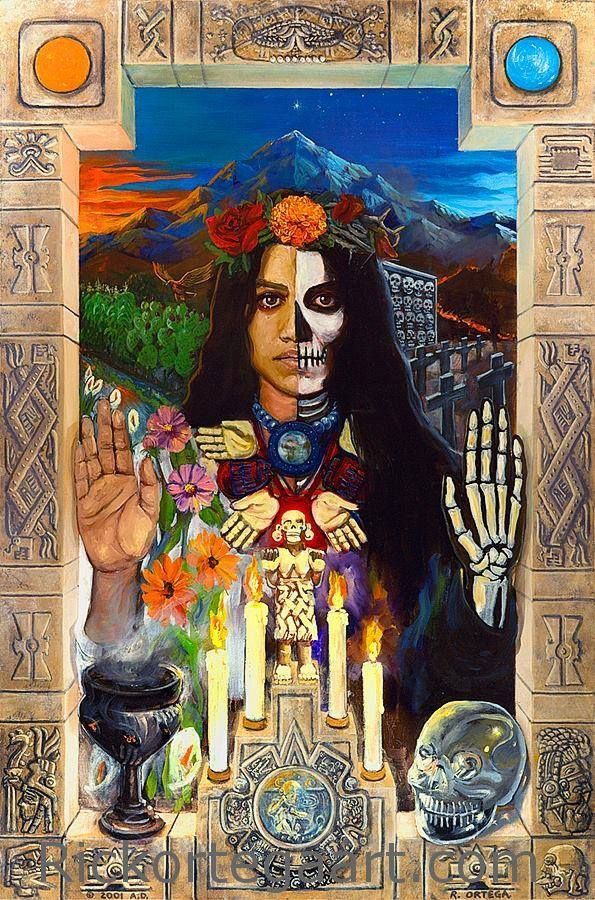
Dia de Muertos, Day of the Dead, the beautiful honoring of our ancestors is nearing, and as I do every year, I am sharing my reflection on Mexican Dia de Muertos.
Leading up to the days of remembrance and celebration, I will share some of my previous DDM posts to help followers of this page better understand and prepare for these holy days. You are invited to look at previous years’ DDM posts for information I might not share this year.
I share this reflection because observance of Dia de Muertos, which is held throughout Mexico, is being increasingly adopted by people of other ethnicities and backgrounds who lacking a ritual of their own have found in our Dia de Muertos a heart home where they can honor their ancestors and other loved ones who have crossed over.
While we are happy to share our beautiful ritual, Dia de Muertos must be treated with respect, reverence, lightness of spirit, and an understanding that Dia de Muertos is not Halloween but a remembering and sacred witnessing of the joys and sorrows of our ancestors, and a celebration of the strength of spirit of we, their descendants, to preserve the soul of this pre-European contact tradition.
As a result of the European/Spanish invasion, forced conversion to Christianity (Catholicism in particular), and ongoing colonization of what today is known as Mexico, Dia de Muertos now takes place on November 1 and 2, having merged with the Catholic All Saints' Day and All Souls' Day.
Typically, November 1 is to honor children and infants, known as Día de los Angelitos (Day of the Little Angels). November 2nd honors adults and is known as Día de Muertos.
Indigenous peoples in Mexico (and in other countries where Indigenous people’s traditional territory extends beyond contemporary borders, such as the Maya) have been holding these celebrations for 3,000 years. In 2003 UNESCO proclaimed Mexico’s Dia de Muertos Intangible Cultural Heritage of Humanity.
Before Mexico’s invasion by the Spaniards, these holy days, for the Mexikah (Aztec), took place in the month that approximates to today’s June/August. They were celebrated for an entire month: the first half of the month as Miccailhuitontli, the feast of the deceased children, and the latter half as Huey Miccailhuitontli, or Feast to the Greatly Revered Deceased (adults). Some say the festivities were dedicated to Mictecacihuatl known as the "Lady of the Dead" and that she corresponds to the modern day Catrina (that was created in 1910 by famous Mexican printmaker and illustrator José Guadalupe Posada), but it’s unlikely.
There are regional differences as to how it is celebrated and the manner in which it is observed is influenced by a family's religion or tribe-specific history and customs.
In my circle of family and community, Dia de Muertos is when we gather to pray for and invite friends and family members who have died to come and enjoy some time with us within whose hearts they yet live. We build ofrendas (altars) to their memory at home and in public places. Some altares are simple and some are elaborate.
Often we hold vigils at the cemetery taking our time to lovingly clean headstones, place candles and bouquets of cempaxochitl (marigolds) on graves, toys (in the case of children), pan de muerto, tamales, drinks, and incense burners filled with copal. It is not uncommon for us to take lawn chairs to the cemetery and sit for hours, even all night, recounting favorite anecdotes and memories of special days and hire a small Norteño or mariachi group to play favorite songs that our beloveds enjoyed when alive. It's both a sad and joyful time as we pray, sing, and reminisce.
In the coming days I will be (re)posting photographs, videos, and articles on Mexican Dia de los Muertos and hope that what is shared helps you prepare to celebrate the life of your loved ones while at the same time respectfully preserving and honoring this important tradition that is the religious and cultural legacy of the ancestors of Mexihca, Maya, Tlaxcaltec, Chichimec, and other Native peoples of what is today known as Mexico, as well as Indigenous traditional territories that today may overlap adjoining countries.
With respect, I ask that you please keep in mind that Mexican Dia de Muertos is rooted in Indigenous culture-specific religious observances. I realize that there are other countries (e.g., Chinese and Celtic, among others) that observe what may appear, on the surface, to be a similar custom, but those observances do not have the same origin and unique expression as ours. Used outside of that as in a winter solstice celebration or other non-Dia De Muerto event, could be considered disrespectful, especially when done so by someone who is not a member of the Mexican or Indigenous community.
By this I mean taking one or more elements of this cultural-spiritual ritual and using them in a different context than for which it was intended.
------------------------------------------------------------
As neither forthcoming posts nor this one are meant to be scholarly articles, please understand that not every detail or aspect is addressed.
Con respeto y aprecio,
by Grace Alvarez Sesma - curanderismo.org
Curanderismo, the Healing Art of Mexico
Above Link to Grace's Facebook page
About Curanderismo, the Healing Art of Mexico
The information given here is of historical, cultural, folkloric and traditional value and is strictly for educational use and does not imply or express any health benefit.
By following this page you agree that you are participating at your own risk and hold harmless Grace Sesma / Curanderismo, the Healing Art of Mexico. Consult your physician regarding the applicability of any information to your symptoms or medical conditions.
This page claims no credit for any images and art posted on this site. All copyright goes to their respective owners.
Other names Maestra Grace
Nickname: Curanderismo Healing Art